Articles
David Skingsley
Faculty of Sciences, Staffordshire University, College Road, Stoke-on-Trent ST4 2DE, UK. E-mail:
This e-mail address is being protected from spambots. You need JavaScript enabled to view it
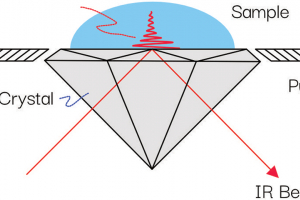
The growing use of Fourier transform infrared (FT-IR) spectroscopy as a tool for quality checking amongst other things foodstuffs, industrial products and pharmaceuticals begs the question of how this technology could be applied to quantifying aspects of the internal environment of living organisms. To do this requires knowledge of the types of exudates and secretions that organisms produce. Usefully, all organisms do this and, as such, the potential to look into the internal environment of living organisms is now being realised. My particular interest is in molluscan mucus as a measure of both species identification and environmental monitoring. This interest has led onto considerations of how monitoring of mucus could be used in other organisms, particularly humans. This article hopes to provide a brief current overview of the use of FT-IR spectroscopy in the investigation of mucus from a variety of organisms.
Read more: Investigation of mucus using Fourier transform infrared spectroscopy
Mattia Cesa
Department of Life Sciences, University of Trieste, Via L. Giorgieri 10, I-34127 Trieste, Italy. E-mail:
This e-mail address is being protected from spambots. You need JavaScript enabled to view it
The intense development of industrial and urban areas in the absence of accurate measures to control pollution sources is often the cause of several environmental problems: dispersed and undetected chemical waste problems, in particular trace elements such as heavy metals, may cause freshwater, soil and water-table contamination. Such events are rarely detectable by sporadic analyses on water samples, since trace element concentrations are often below the instrumental detection limits and/or quickly change in space and time.
James A. Calladine and Michael W. George
School of Chemistry, University of Nottingham, University Park, Nottingham, NG7 2RD, UK. E-mail:
This e-mail address is being protected from spambots. You need JavaScript enabled to view it
Often, chemists are interested in the most efficient way of converting our starting materials into the desired product. A huge number of reactions proceed via the production of intermediate species, see Scheme 1, which are usually short-lived and difficult to detect. Such intermediates are considered to be of great importance because it is their reactivity which can determine the outcome of a reaction and, hence, the efficiency with which the final product is made. This can have widespread importance across the whole of chemistry, ranging from pharmaceutical and organic synthesis to catalysis and materials chemistry.
Johan Boman
Department of Chemistry, Atmospheric Science, University of Gothenburg, SE-412 96 Göteborg, Sweden. E-mail:
This e-mail address is being protected from spambots. You need JavaScript enabled to view it
Introduction
In urban environments, where the majority of the human population lives, air pollution is a major threat to human health. In many countries and regions of the world, this has led to the implementation of regulations to control the emissions of air pollutants and limits for the allowed concentrations of different types of air pollutants. The limits are set at levels at which harm to the health may occur if the limits are exceeded. One of these pollutants is aerosol particles. In most cases, the environmental quality standards limit is set to a certain mass concentration of particles of a certain size.
Read more: Trace element analysis of urban aerosol particles using X-ray fluorescence spectrometry
William J. Foley
Evolution, Ecology and Genetics, Research School of Biology, Australian National University, Canberra 0200, Australia
Introduction
Imagine going to the supermarket to do your daily shopping unsure about being poisoned by the food on the shelves. Imagine having to first identify the aisles that contained the poisonous foods and those that did not and then having to choose between two apparently identical packets, one of which was toxic and the other not. To make it even harder, the toxicity of your choices can change seasonally or even after a short shower of rain! And then imagine if, when you went on vacation, all the foods were different with different types of toxins and some of them so strange that you were not sure exactly how to eat them!
Read more: Near infrared reflectance spectroscopy in ecological studies of plant–animal interactions
More Articles...
- A toast to dynamic NMR spectroscopy: towards a better comprehension of palatable emulsions
- Natural rubber latex gloves—identifying and localising allergens applying mass spectrometric methods
- Secondary neutral mass spectrometry—a powerful technique for quantitative elemental and depth profiling analyses of nanostructures
- Arsenic speciation: a tool for assessing the environmental toxicology of arsenic using earthworms and toenails as biomarkers
Page 1 of 24
Popular Techniques
- Atomic absorption
- Atomic emission
- Chemometrics
- ICP-MS
- Imaging
- Infrared
- Ion mobility
- Laser spectroscopy
- Luminescencefluorescence
- Mass spectrometry
- Microscopy
- Mobile
- Near infrared
- NMR ESR EPR
- Process
- Raman
- Related equipment
- RMs and standards
- Sample prep
- Separation science
- Software
- Surface analysis
- Terahertz
- UVvis
- X-ray spectrometry
Newsletter
Upcoming Events
- 16.03.2010 - 19.03.2010 Pharma & Biotech Supply Chain ...
- 22.03.2010 - 26.03.2010 EMS2010
- 23.03.2010 - 26.03.2010 Analytica 2010: 22nd Internati...
- 24.03.2010 - 24.03.2010 EMS2010: The 5th National Meet...
- 27.03.2010 - 28.03.2010 RECOMB Computational Proteomic...