

Spectroscopy News

Scientists from Moscow, Russia studied the dynamics of lithium plasma under laser-induced breakdown spectroscopy using a custom system made using 3DLINE code.

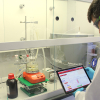
Magritek has made benchtop NMR suitable for the rapid identification and quantitation of analytes during chemical reactions, in batch and continuous flow processes. This significant advancement in NMR has been achieved by Magritek thanks to the improved magnet performance of its Spinsolve ULTRA system, which enables effective and robust solvent suppression.

The Instrumentation Excellence Awards have recognised vacuum equipment specialist Leybold UK. The Leybold Hygienic Enclosure for vacuum pumps has won Product of the Year Cases and Enclosures. The Awards celebrate the best professionals, products, projects and companies across the test, measurement, sensing and control sectors.
HORIBA announced today that it has acquired Process Instruments, Inc. Process Instruments, a leading developer and manufacturer of Raman process spectroscopy for environmental and process markets, will become part of the HORIBA Group’s.

Hamamatsu Photonics, a global leader in photonics technology, is proud to announce its 70th anniversary, marking seven decades of achievements and contributions to the world of photonics.
PHOTONIS Group has acquired four companies (Xenics, Proxivision, Telops and Elmul) since December 2022. The worldwide leader in image intensifier tubes, the company has diversified its technologies and product portfolios to become the worldwide leader in detection and imaging technologies. To illustrate that strategy, PHOTONIS GROUP becomes EXOSENS
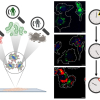
A new scientific study published in the prestigious international journal "Science Advances" has investigated one of the still poorly understood aspects of cancer, therapy-induced senescence in tumour cells. The study, the result of collaboration among researchers from Politecnico di Milano (Italy), Johns Hopkins University in Baltimore(USA), the National Cancer Institute in Milan (Italy), and the National Research Council (Italy), expands our understanding of cancer biology and paves the way for future therapeutic advancements.
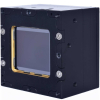
The IrLugX longwave infrared camera core and the IrqLa shortwave infrared camera core, have changed their trade names to Crius and Aion respectively.
Photonis has signed a definitive agreement to acquire Telops, developer and manufacturer of hyperspectral imaging systems and infrared cameras.
Quantum Design UK and Ireland are celebrating 23 years of Spectroscopic Ellipsometry workshops with their partner, J.A. Woollam.

A new platform combines 17-plex assays with MALDI-TOF MS to target 14 different mutation sites of the spike gene.
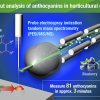
Probe electrospray ionisation tandem mass spectrometry has been used to analyse anthocyanins in crops.
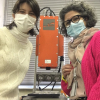
Imaging enables screening of samples to be submitted to 14-C dating.
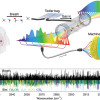
A breathalyser for detecting COVID and other diseases has been developed by scientists at JILA.
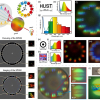
New design has exhibited practical potential for the construction of ultra-compact multispectral and polarised imaging devices without the need of a multi-pass design using complicated spectral filters or mechanically moving parts.

A team has developed highly sensitive imaging methods at BESSY II to detect heavy metals such as cadmium in cocoa beans. Improved processing steps could reduce the burden.
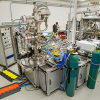
Using advanced in situ spectroscopy techniques, scientists at Binghamton University and Brookhaven Lab gain new insights into catalytic oxidation.
New optical comb spectroscopy technique using a quantum state with reduced noise called “squeezed light” could achieve more than a ten-fold improvement in detection limits.
